2026-10-25 · Sean O'Connor
Boston Public Works Permit Process for Street Dumpsters
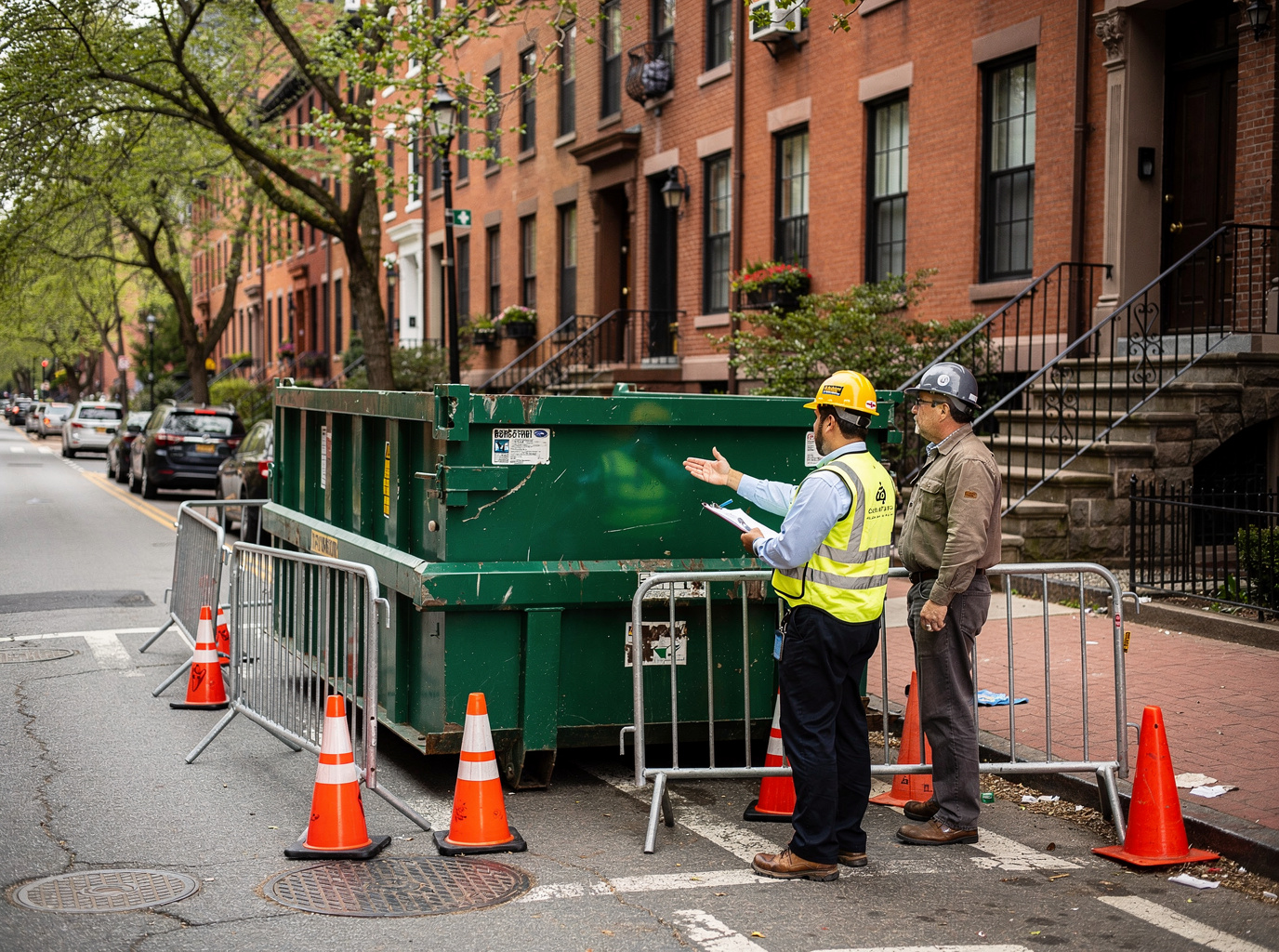
Boston requires a Public Works permit before any dumpster can sit on a public street. Applicants must file through the city's online portal or in person at the Public Works office, supply liability insurance documentation, and receive approval that specifies exact placement coordinates and duration.
Application Requirements and Documentation
Boston Public Works demands a completed application that lists the exact address, dumpster size, and project duration. Property owners or contractors must also provide a certificate of insurance naming the City of Boston as additional insured. In dense blocks of the North End or Charlestown, reviewers check whether the proposed spot blocks fire lanes or MBTA stops before issuing approval. The same documentation applies whether the job is in Jamaica Plain or near Boston Harbor.
Timing and Review Process in Suffolk County
Review times vary with project scale and season. Smaller residential jobs in the South End often clear faster than commercial placements near Faneuil Hall because traffic volume and pedestrian counts differ. Winter applications receive extra scrutiny once snow removal routes are mapped; crews must ensure the unit will not interfere with plowing on streets like those in Roxbury or East Boston. Applicants should allow buffer days around the initial submission to handle any requested revisions.
Placement Rules in Historic and Dense Neighborhoods
Narrow one-way streets in Beacon Hill and the North End limit dumpster width and require reflective markers plus cones at both ends. Triple-decker blocks in Dorchester and Allston frequently need sidewalk protection boards because root systems and old brick sidewalks are easily damaged. Near the Freedom Trail or Boston Common, additional approvals from the Boston Transportation Department may be layered on top of the basic Public Works permit. Cambridge and Somerville jobs that cross the Harvard Bridge follow their own municipal rules even when the dumpster itself sits in Boston.
Weather and Seasonal Factors Affecting Permits
Boston's humid continental climate moderated by the Atlantic Ocean brings heavy spring rains that can soften soil under dumpster wheels in low-lying sections of the South Boston waterfront. After snowstorms, the city enforces stricter clearance distances from hydrants and crosswalks, which is why many operators consult the winter placement rules before submitting applications. Summer heat combined with high humidity can accelerate odor issues on longer-term residential projects, prompting some permits to include mandatory lid requirements.
Common Pitfalls and How Locals Avoid Them
Missing the insurance endorsement is the fastest way to have an application returned. Residents in Brighton and Brookline often underestimate how quickly a 10-yard unit can obstruct parking on streets already crowded with triple-deckers. Linking the permit request to a clear debris removal plan helps reviewers see that the dumpster will not remain longer than necessary. For residential jobs, the Residential Dumpster Rental page outlines typical volumes that fit most triple-decker renovations. After major snow events, the Boston Winter Dumpster Placement Rules After Snowstorms article provides updated clearance diagrams that align with current Public Works expectations.