2026-10-25 · Sean O'Connor
Boston Winter Dumpster Placement Rules After Snowstorms
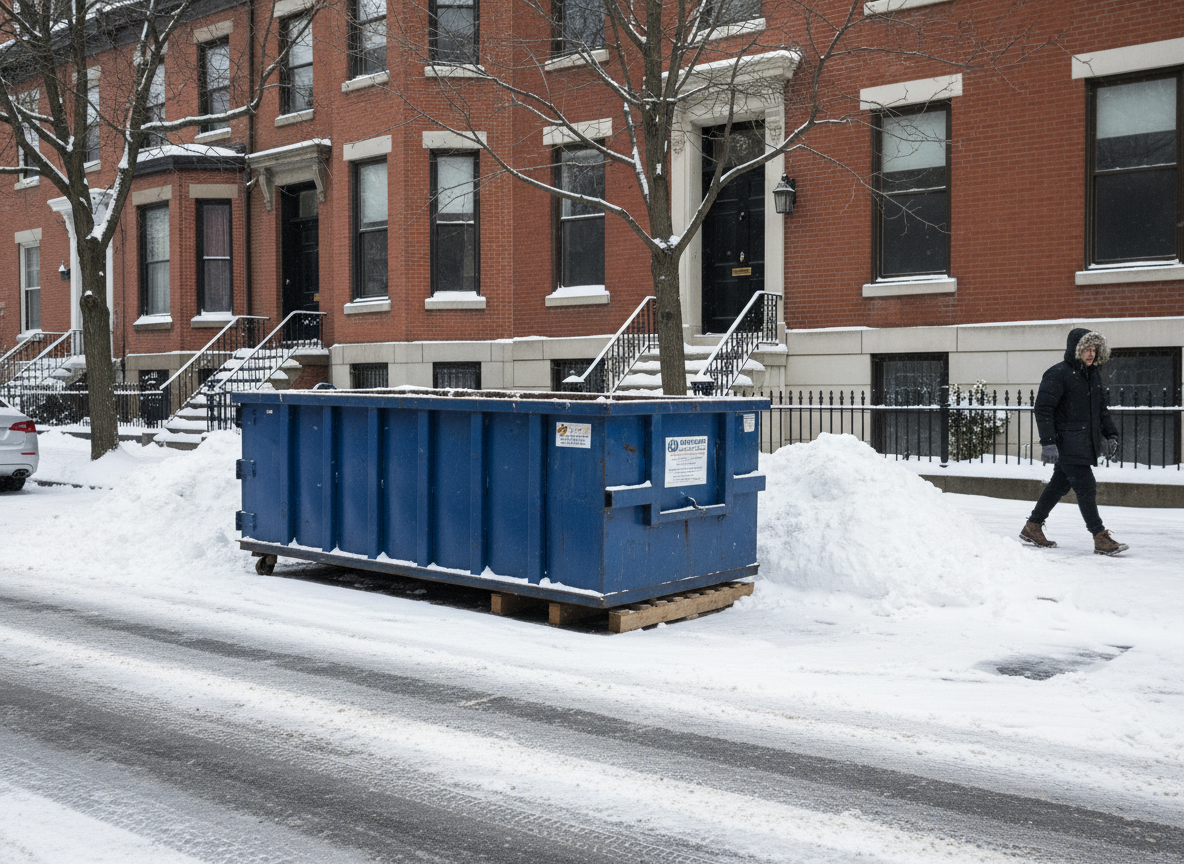
After snowstorms in Boston, dumpsters must sit on cleared pavement or private property at least 48 hours after the last plow pass to avoid blocking city equipment, with placement adjusted for the humid continental climate that brings heavy, wet snow followed by freeze-thaw cycles moderated by the Atlantic Ocean.
Street Clearance Rules in Dense Neighborhoods
Boston streets in Beacon Hill and the North End stay narrow even after plows pass, so any street-placed dumpster needs a 6-foot buffer on both sides for salt trucks and emergency vehicles. In the South End and South Boston, wider blocks allow slightly more flexibility, yet crews still require full curb access within 24 hours of a storm. Dorchester triple-deckers often have limited curb space once snow banks form, forcing many residents to move units onto driveways instead. Cambridge and Somerville crews coordinate with Boston Public Works, so a unit left on the street overnight can receive a ticket if it sits in a designated snow emergency route. Local operators check plow schedules before delivery to prevent the container from becoming buried or shifted by equipment.
Private Property Placement on Historic Blocks
Beacon Hill and Back Bay brownstones leave little frontage, so dumpsters usually go in rear alleys or small courtyards once snow is shoveled clear. Jamaica Plain and Roxbury lots often have uneven terrain that turns icy, requiring plywood under the container feet to prevent sinking during thaws. East Boston and Charlestown waterfront properties face salt spray that accelerates rust on metal dumpsters, so placement stays farther from the harbor edge. Allston and Brighton single-family homes with driveways give more room, yet owners still clear a 10-foot path around the unit for weekly trash collection. These adjustments keep the container stable when temperatures swing from 30 degrees to single digits overnight.
Snow Removal and Access Requirements
City rules require the area around any street or alley dumpster to stay shoveled within 12 hours after each storm so sanitation trucks can reach it. In Fenway Park and Boston Common vicinities, foot traffic increases after snow events, making clear pathways essential to avoid pedestrian slips. Operators in Suffolk County often schedule follow-up visits the day after a nor'easter to re-level snow banks that encroach on the unit. Homeowners in the South End and North End frequently request same-day moves when plows push fresh snow against the container doors. Consistent clearing prevents the 4- to 6-inch ice layer that forms quickly under the Atlantic-influenced freeze cycle and locks lids shut.
Permit Coordination After Storms
Street permits through Boston Public Works must be updated when snow changes placement, especially near the Freedom Trail or Faneuil Hall where pedestrian and tour bus routes stay priority. The Boston Public Works Permit Process for Street Dumpsters outlines the exact steps for re-permitting after a storm shifts a container. Many residents in Brookline and Somerville border areas also check neighboring town rules before moving a unit across city lines. Dumpster Rental and Residential Dumpster Rental teams familiar with these neighborhoods adjust schedules around the Mon–Fri 8am–6pm and Sat 9am–2pm window at 72 Kneeland St Suite 405 to keep projects moving without added delays.