2026-10-25 · Sean O'Connor
Debris Volume Guide for Boston Triple-Decker Renovations
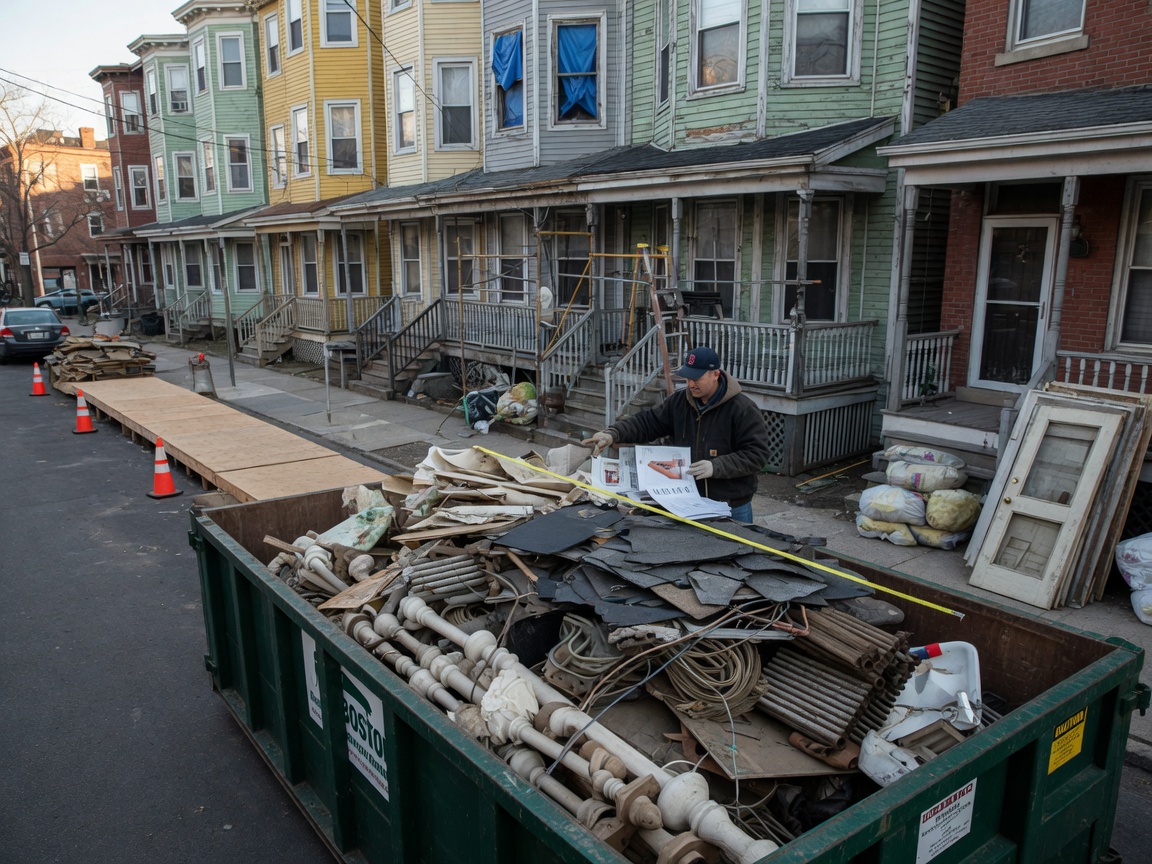
Boston triple-decker renovations typically generate 25–50 cubic yards of debris depending on whether the work covers one unit or the full building. Older wood-frame homes built between 1900 and 1930 in neighborhoods such as Dorchester, Jamaica Plain, and Roxbury contain plaster, lath, and narrow stairwells that increase waste volume compared with newer construction. Narrow streets and tight lots in Beacon Hill or the North End often require smaller 10- or 15-yard containers rather than larger roll-offs. Winter conditions moderated by the Atlantic Ocean add frozen material and extra packaging that can push totals higher.
Structural Demolition Volumes
Removing interior walls in a typical triple-decker unit produces 8–12 cubic yards of mixed wood, plaster, and insulation. Full gut renovations across three floors commonly reach 30–35 cubic yards before accounting for roof or porch work. In South End and Charlestown buildings, brick party walls and slate roofs add another 5–8 cubic yards of heavy material that requires separate handling. Crews working in Allston and Brighton frequently separate clean wood from painted or treated lumber to meet local transfer station rules. These breakdowns help residents select the right residential dumpster rental size before work begins.
Finishes and Fixture Removal
Kitchen and bath remodels in East Boston triple-deckers usually contribute 6–10 cubic yards from cabinets, tile, and old plumbing fixtures. Original hardwood floors removed across two stories add 4–7 cubic yards of dense material. Properties near Boston Common or the Freedom Trail often retain period details such as tin ceilings and marble mantels that increase both volume and sorting time. Homeowners in Cambridge and Somerville bordering Boston report similar yields when updating 1920s-era units. Accurate counts prevent overflow fees and keep projects on schedule during the short New England construction season.
Seasonal and Weather Adjustments
Boston’s humid continental climate brings snow and ice from December through March that can add 10–15 percent more volume from protective tarps and de-icing materials. Frozen ground in Roxbury or Mattapan lots complicates container placement and may require extra plywood or gravel base. The Boston winter dumpster placement rules after snowstorms outline clearance requirements that affect how much debris crews can load each day. Planning for these conditions in advance avoids delays when working on triple-deckers in Brookline or South Boston.
Street Placement and Permit Realities
Many triple-decker lots lack rear access, so containers must sit on public streets in dense areas like the South End or Charlestown. The Boston public works permit process for street dumpsters requires applications at least 48 hours ahead and limits container length to 12 feet on most residential blocks. Permits in Suffolk County neighborhoods also restrict placement near fire hydrants and crosswalks. Residents in nearby Somerville and Brookline face similar rules, making early coordination essential for any renovation that spans multiple units.